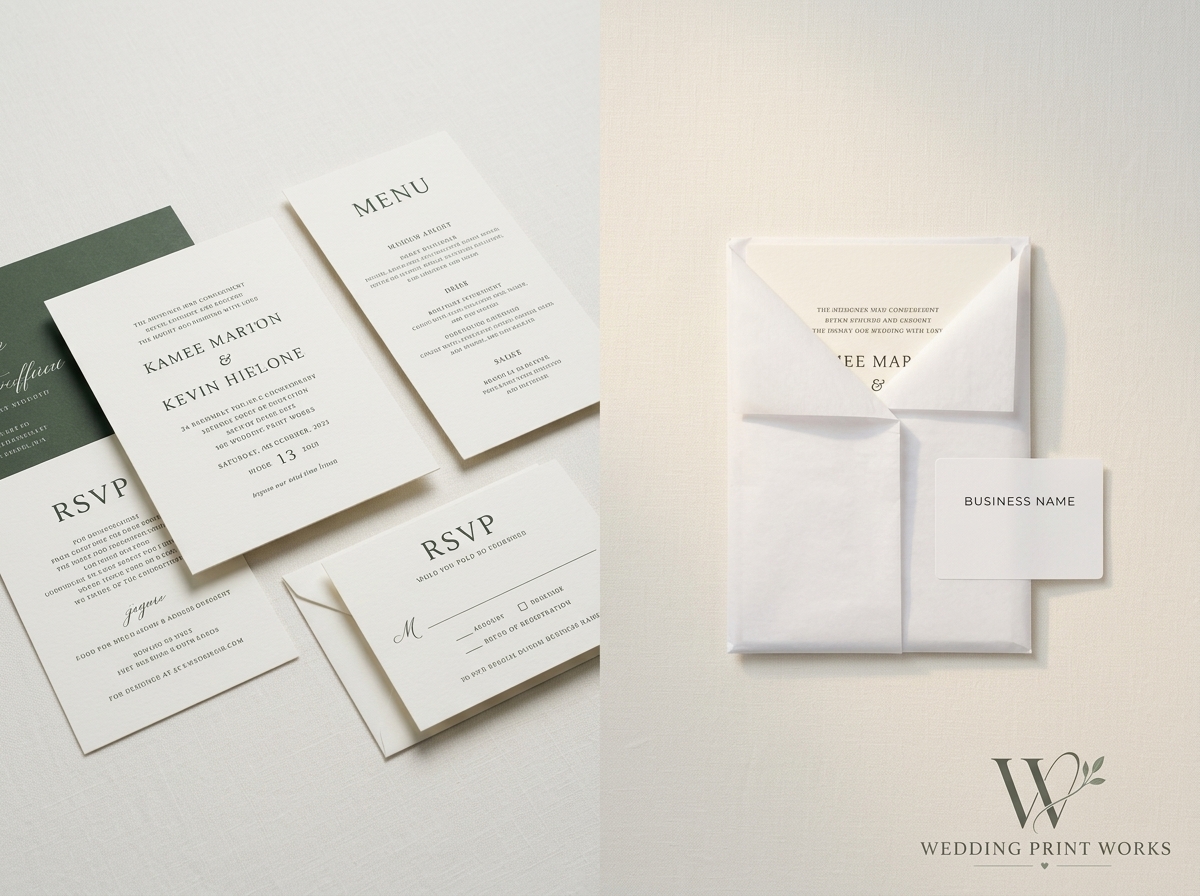
White-label wedding stationery printing allows you to outsource physical production while keeping your own brand and client relationships. You supply the designs and specifications; a print partner produces the finished items for you to sell under your business name.
For designers and small stationery businesses, this can make it easier to offer coordinated collections without buying production equipment or taking every job through your own workspace. The key is choosing a partner whose process, materials and communication suit the way you work.
What does white-label wedding stationery printing mean?
In a white-label arrangement, a third-party printer makes products that are sold under your brand rather than the printer’s. Depending on the agreement, the printer may produce the stationery for you to check, pack and send, or the products may be prepared for another agreed fulfilment arrangement.
White-label does not automatically settle every detail. Before placing work, clarify whether the printer’s name will appear on the products, packaging, paperwork or delivery information, and who will handle packing, dispatch and any client queries.
Why use a trade print partner?
Outsourcing production can free up time for design, marketing and customer service. It may also let you offer products or quantities that would be difficult to produce in-house, without investing in specialist equipment or managing every production step yourself.
A production partner can help turn approved artwork into printed and finished stationery. Your role remains central: you shape the collection, advise your client, approve the proof and manage the customer relationship. The printer’s role is to manufacture to the agreed specification.
When comparing suppliers, look beyond the word “white-label”. Ask how they handle artwork, proofs, paper choices, finishing, quality checks, reprints and delivery. Clear answers help you set realistic expectations with your own customers.
How white-label printing works
1. Agree the specification
Start by confirming the finished size and shape, paper or board, print requirements, quantity and any finishing details. Include how the pieces relate to one another if you are ordering a suite. A clear specification reduces avoidable queries and gives both you and your supplier a shared reference point.
2. Prepare and approve artwork
Supply files in the format and layout requested by the printer. Check spelling, names, dates, alignment and any details that matter to the design before approval. Ask how proofs are supplied and what they show: a digital proof can help check layout and content, but it may not represent the exact colour or feel of the final stock.
3. Production and quality checks
Once the artwork and specification are approved, the printer produces the order and checks it against the agreed requirements. Ask what checks are included and how any issue is handled. Colour and appearance can be affected by the artwork, printing process and chosen stock, so discuss expectations before production rather than relying on an on-screen preview alone.
4. Packing and delivery
Agree in advance where the finished stationery will be sent and how it will be presented. If you want a fully white-label experience, confirm whether supplier branding is excluded from the products and any accompanying packaging or paperwork.
Building a coordinated stationery range

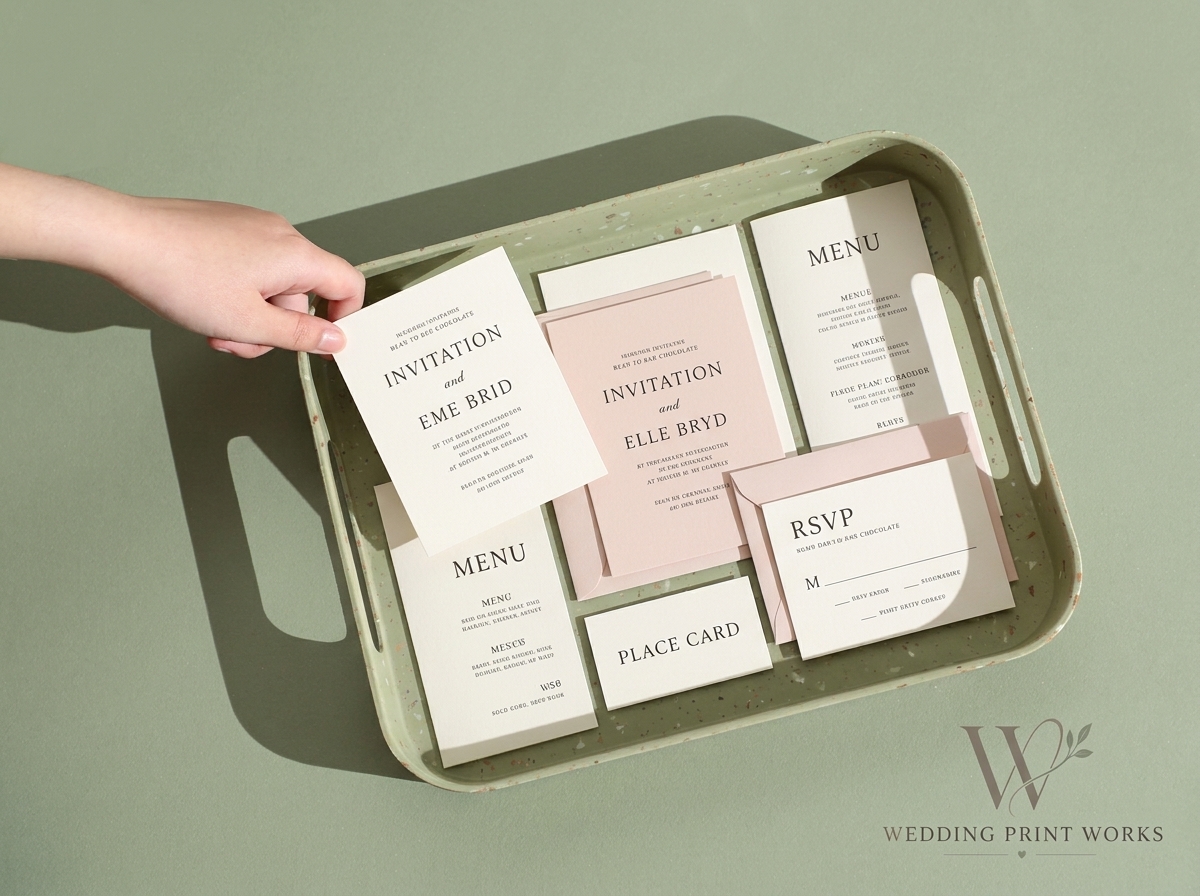
A production partner can help you develop a broader offer around a design. Depending on the products and specifications available, a collection might include save-the-dates, invitations, information cards, menus, place cards, table stationery and other printed wedding items.
Choose materials to suit the design
Paper and board affect the look, weight and feel of a finished piece. When selecting stock, consider how it supports the artwork, how it will be used and whether it needs to work across several items in the suite. Ask your printer which options are available and whether the chosen stock is suitable for the size, shape and production method.
Consider shapes and finishing early
Distinctive shapes, such as arches, waves and scallops, can help a collection feel individual. They also affect artwork preparation and production, so discuss the shape and finished dimensions with your printer before finalising the design. If you are considering specialist finishing, check what is available, how it affects the specification and whether it can be applied consistently across the pieces in your order.
Keeping your brand and customer relationships
In a white-label arrangement, you remain the designer and the customer-facing business. Your client buys from you, and you decide how the collection is presented and priced. The production partner works behind the scenes according to the agreed process.
It is worth confirming practical details in writing: who communicates about artwork queries, who approves proofs, how changes are handled and who contacts the client if a delivery issue arises. A dependable workflow is as important to your brand as the finished print.
Frequently asked questions
What is white-label wedding stationery printing?
It is a production arrangement in which a printer manufactures stationery designed or supplied by your business for you to sell under your own brand. The exact arrangements for branding, packing and delivery should be agreed with the supplier.
Will my clients know who printed the stationery?
That depends on the arrangement. Confirm whether the printer’s branding will appear on the stationery, packaging, paperwork or delivery information. White-label production should be discussed in practical terms rather than assumed to cover every part of fulfilment.
Can I offer a full range of wedding stationery?
A trade print partner may help you extend your range across items such as invitations, information cards, menus and place cards. Check the available products, materials, sizes, shapes and finishes before promising a particular option to a client.
How can I check the quality before offering a product?
Ask about the proofing process and request samples where available. A proof can help you check content and layout, while a physical sample gives a better sense of the stock and finish. Confirm how the printer handles production checks and any problems with an order.
Wedding Print Works supports designers with trade wedding stationery printing, helping businesses keep their focus on design and customers while their stationery is produced to an agreed specification. Explore the options for designers.